Earth
By the end of this chapter you can
- Describe the four components of the Earth system, the layers of the atmosphere and ocean, the water cycle and the Earth's layers, and explain why Earth supports life (9.1)
- Describe igneous, sedimentary and metamorphic rocks and explain how they form in the rock cycle (9.2)
- Explain exogenic and endogenic processes that change the Earth's surface (9.3)
- Describe geohazards, their impact, and the technology used to give early warnings (9.4)
- Describe the age of the Earth, the geological time scale and the importance of fossils (9.5)
- Explain surface and underground water, economic minerals, the formation of coal and petroleum, the hydrothermal process and the effects of unplanned human activities (9.6)
9.1The System and Structure of the Earth
Earth is spherical, even though the horizon looks flat. The voyage of Ferdinand Magellan's crew around the world (1519–1522) proved it. His translator was a Malay man from Malacca, Panglima Awang.
Atmosphere — the air zone covering the Earth's surface.
Hydrosphere — the water zone: rivers, lakes, seas, ice, underground water and water vapour in the air.
Geosphere — the rock and soil zone on the Earth's surface.
Biosphere — the life zone: humans, animals, plants and microorganisms.
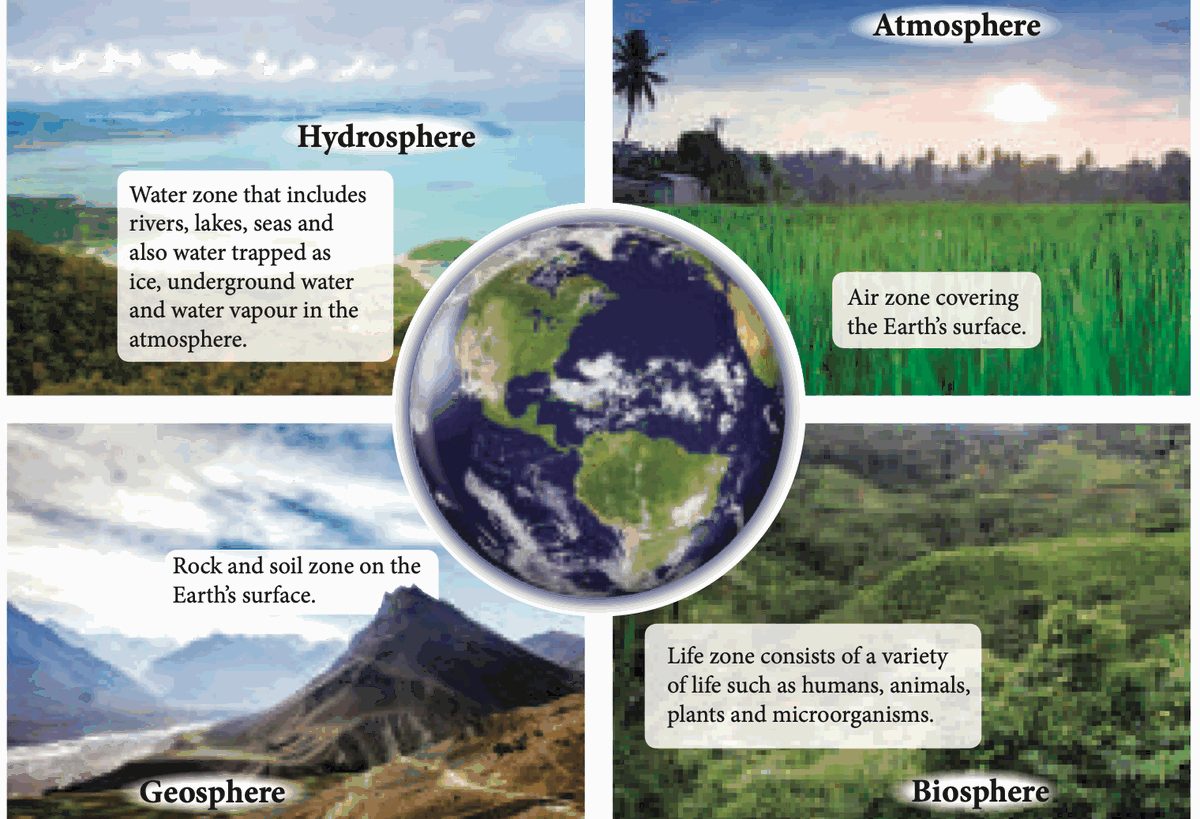
Textbook Photograph 9.1, p. 256.
Layers of the atmosphere
The atmosphere has five layers. Learn them from the ground upwards: Troposphere, Stratosphere, Mesosphere, Thermosphere, Exosphere.
| Layer | Height | What happens there |
|---|---|---|
| Troposphere | 0 – 13 km | Living things breathe; wind blows; clouds, rain and snow form (the weather layer) |
| Stratosphere | 13 – 50 km | Stable layer for aircraft flights; contains the ozone layer, which absorbs harmful ultraviolet (UV) rays |
| Mesosphere | 50 – 80 km | Meteorites burn up and are destroyed |
| Thermosphere | 80 – 480 km | Also called the ionosphere — its ions reflect radio waves; the aurora (coloured lights) happens here |
| Exosphere | 480 km and above | Light gases (helium, hydrogen); air becomes thinner towards space; communication satellites orbit here |
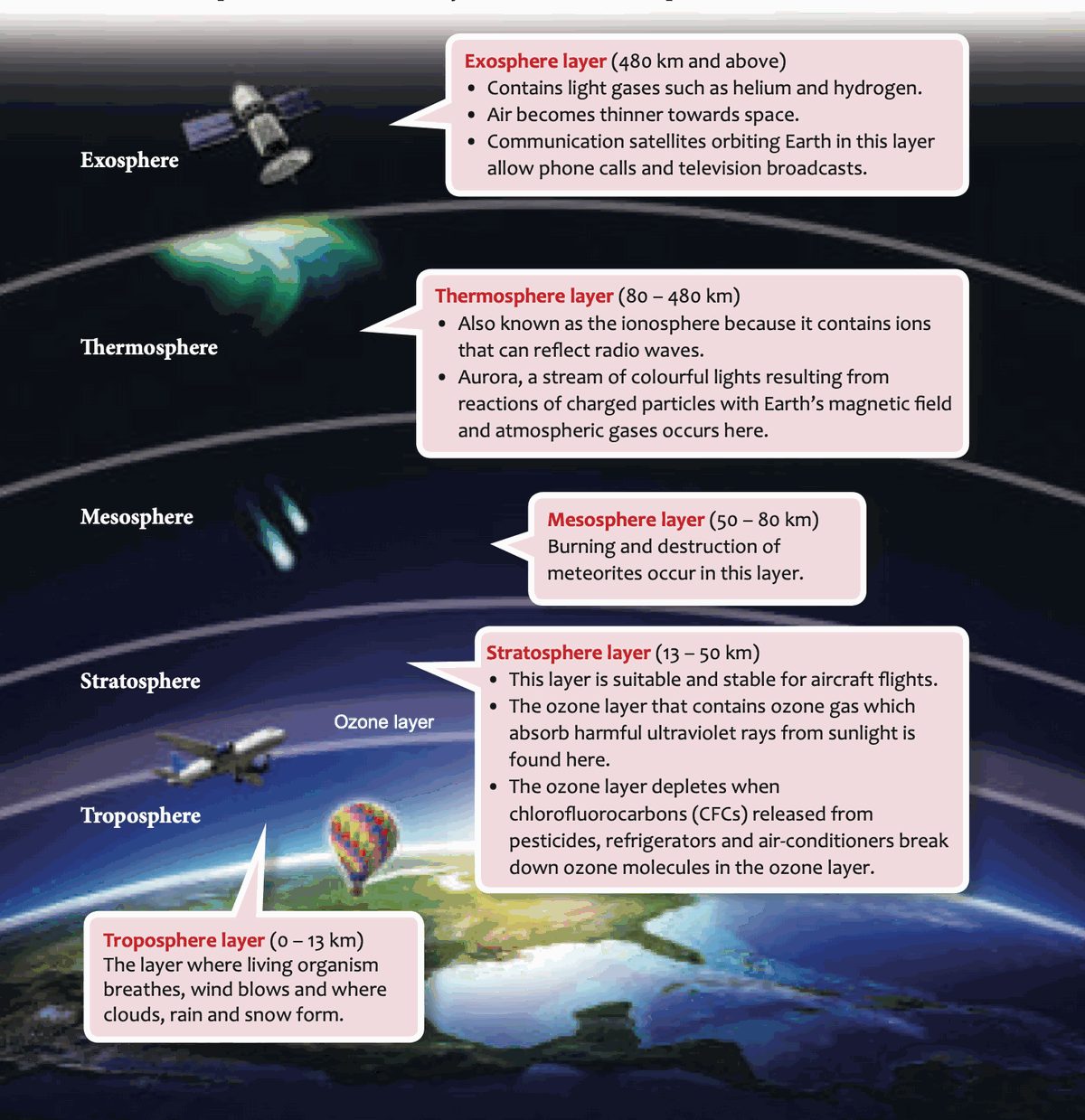
Textbook Figure 9.1, p. 257.
Altitude and air pressure. The higher you go, the lower the air pressure and the lower the temperature. That is why mountain climbers feel cold and find it harder to breathe. Air pressure at sea level is about 101 325 Pa.
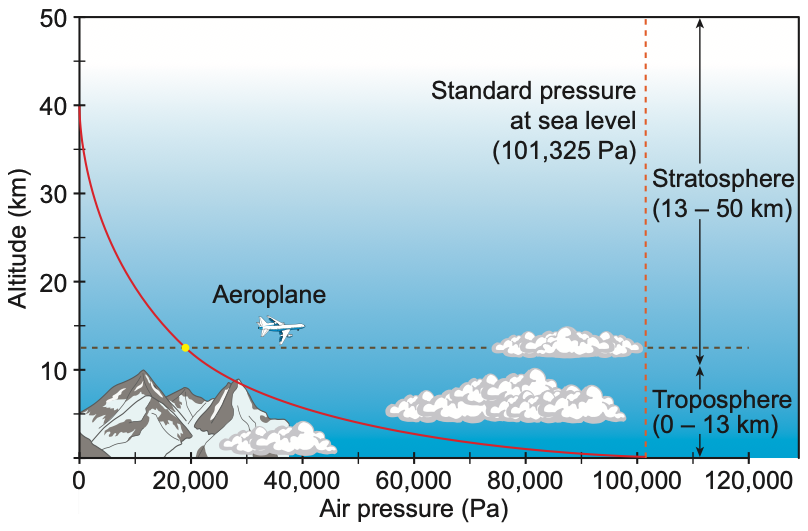
Textbook Figure 9.2, p. 258.
Zones of the ocean
The ocean is divided into zones by how much light reaches them.
| Zone | Depth | Light | Life |
|---|---|---|---|
| Surface zone | 0 – about 200 m | Light can get through | Plants can live here (they need light) |
| Midnight zone | about 200 – 1500 m | Little or no light | Hard for plants; large animals such as giant squids and whales |
| Dark zone | below about 1500 m | No light at all | Most animals have shimmering bodies or glow in the dark |
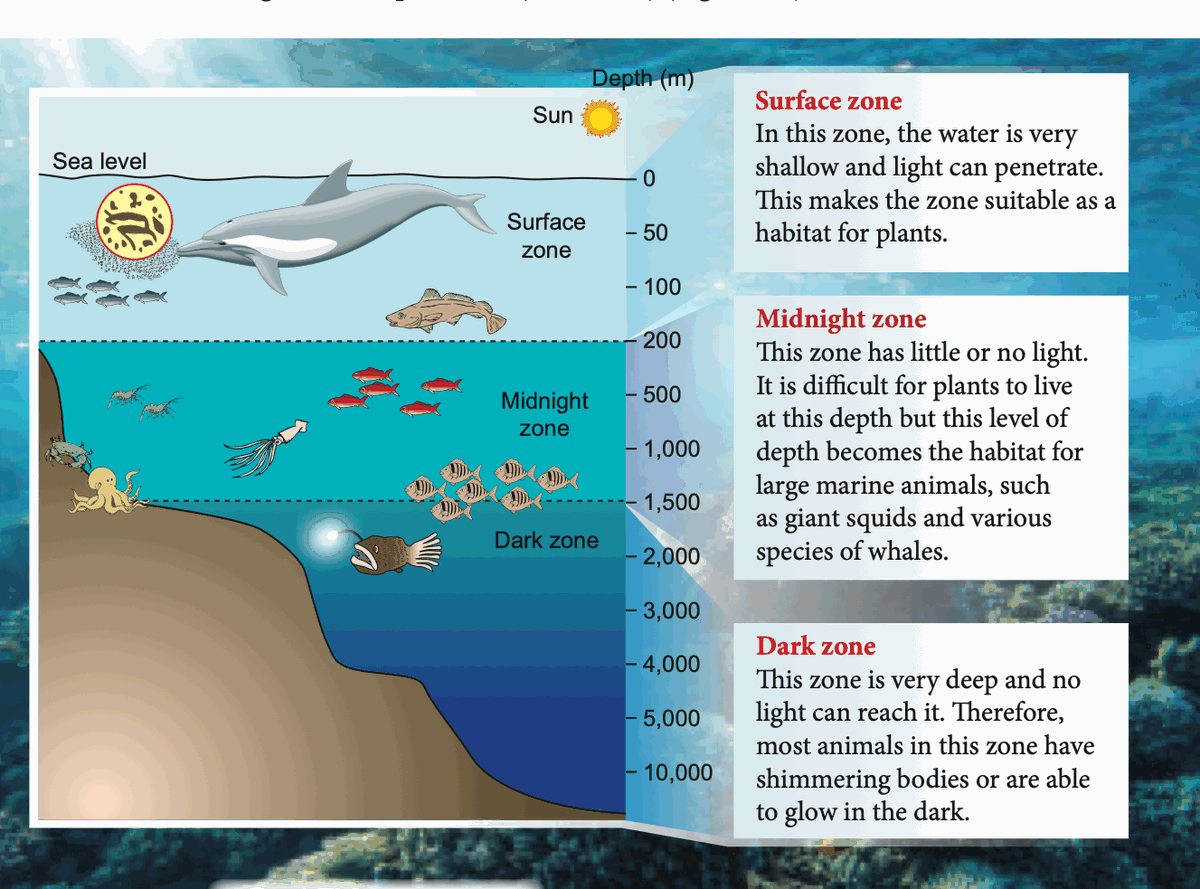
Textbook Figure 9.3, p. 258.
The water cycle
The Sun evaporates seawater. The water vapour condenses into clouds, which are carried over land and fall as rain. Rainwater flows over the surface into rivers, or seeps into the ground as underground water, and finally returns to the ocean. Because the cycle never stops, the total amount of water on Earth stays constant.
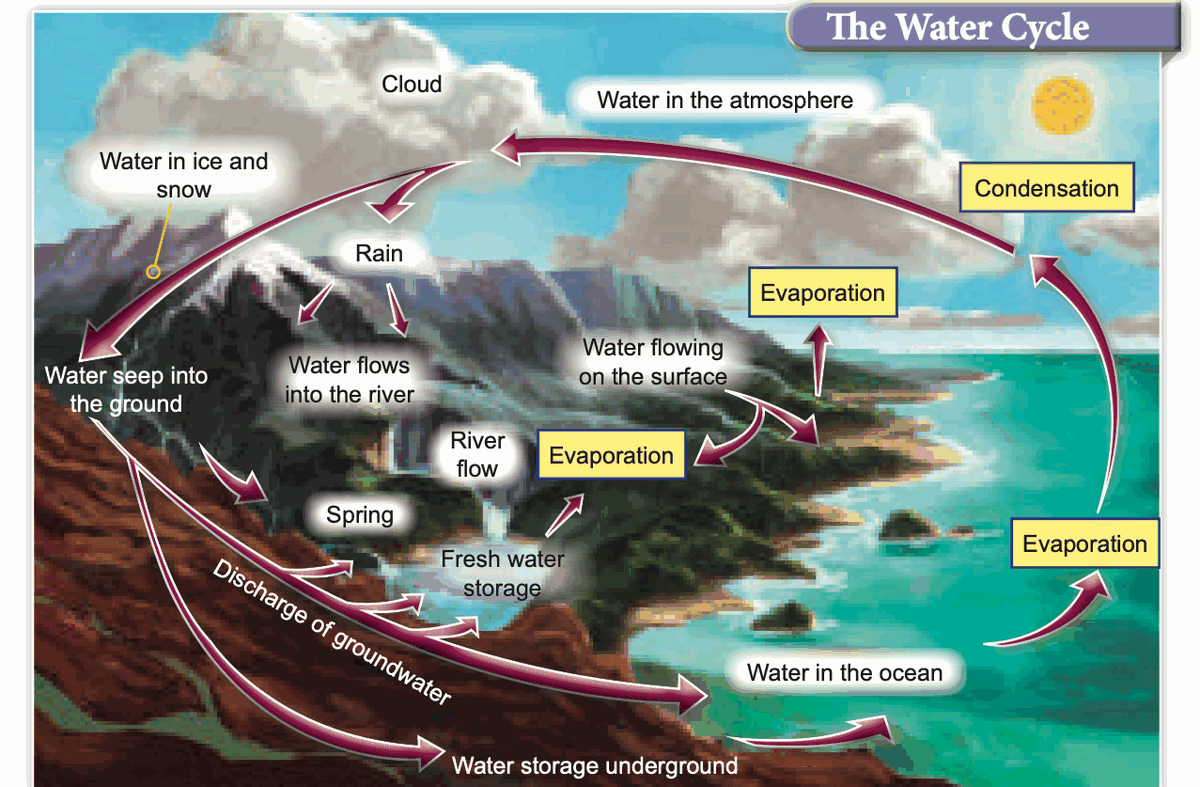
Textbook Figure 9.4, p. 259.
The Earth's layers
Earth has three main layers based on its physical properties: the crust, the mantle and the core (outer core and inner core). The mantle is made up of the lithosphere, asthenosphere and mesosphere. The lithosphere covers the crust and the top part of the mantle.
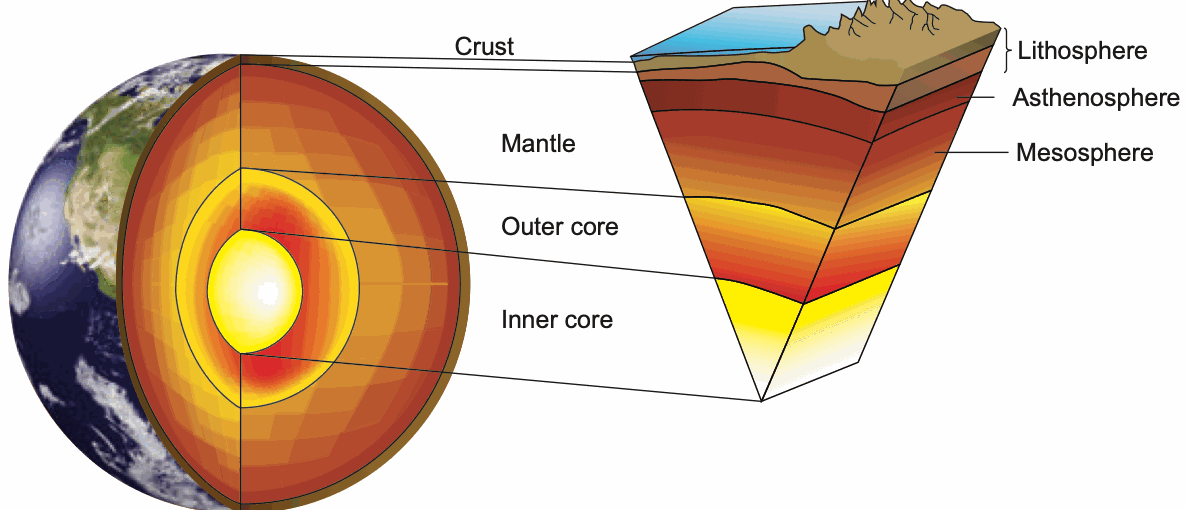
Textbook Figure 9.5, p. 260.
Why only Earth supports life
Earth is the third planet from the Sun and the only planet in our Solar System known to support life, because:
- its temperature is not too hot and not too cold — it is not too near and not too far from the Sun;
- it has water;
- it has oxygen.
Show answerHide answer
9.2Composition of the Earth
The Earth's crust is made of rocks. All rocks contain natural materials called minerals. Rocks differ in colour, structure, texture and how they formed, and they take thousands of years to form.
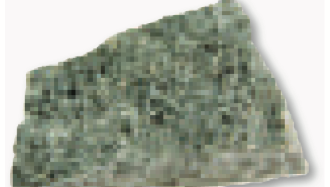 Igneous rock
Forms when magma or lava cools and freezes. Contains various minerals.
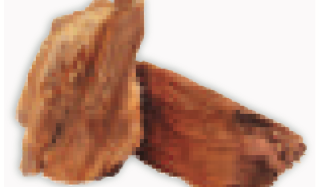 Sedimentary rock
Forms when materials deposited by rivers, glaciers and wind are compressed. Has layers, is sometimes hollow and may contain fossils.
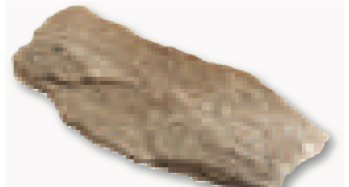 Metamorphic rock
Forms when igneous or sedimentary rock is exposed to very high pressure and temperature. Usually harder than the original rock.
Rock photographs: textbook Table 9.1, p. 262.
The rock cycle
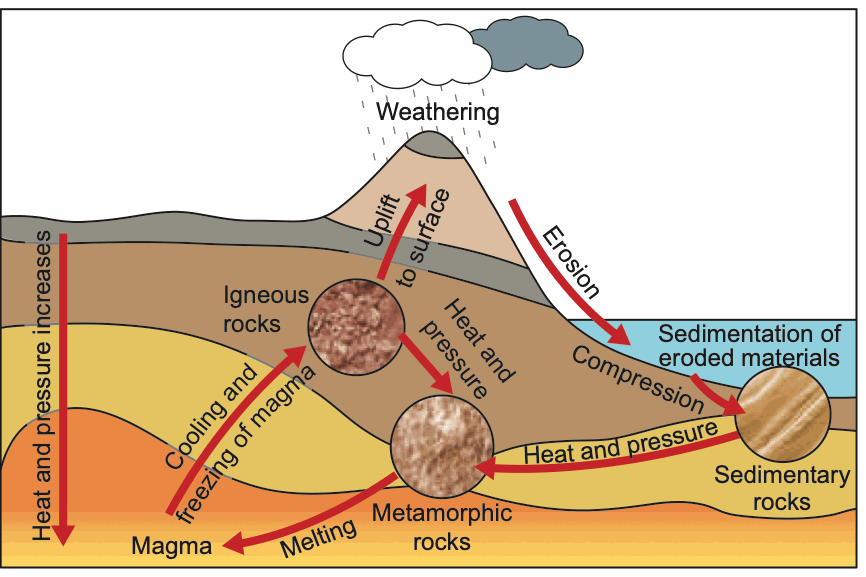
Textbook Figure 9.6, p. 262.
- Magma cools and freezes → igneous rock.
- Rock is uplifted to the surface, then broken up by weathering and carried away by erosion.
- The eroded materials settle (sedimentation) and are compressed → sedimentary rock.
- Heat and pressure change igneous or sedimentary rock → metamorphic rock.
- Deep underground, rock melts back into magma, and the cycle starts again.
Show answerHide answer
9.3Main Processes of the Earth
Two kinds of process shape the Earth's surface.
Endogenic process — a process caused by forces from within the Earth.
Exogenic processes
| Process | What it is |
|---|---|
| Weathering | Rocks break up and decay because of changes in temperature, rainwater, frost and microorganisms |
| Erosion | The surface is worn away by moving agents: water, wind and waves |
| Mass and land depletion | Soil moves down a slope because of gravity |
| Transport and sedimentation | Running water, wind, waves and glaciers carry weathered material; it settles when the agent slows down |
Endogenic processes
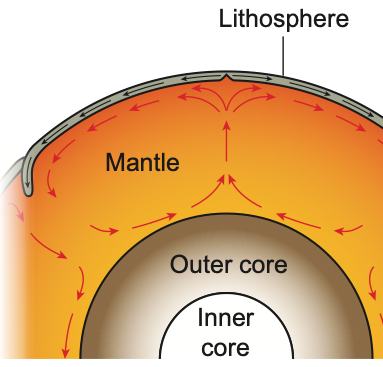 Mantle convection
Heat from the mantle and core makes convection currents in the asthenosphere. These currents move the crust.
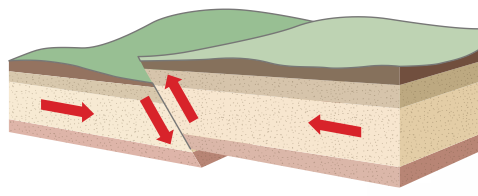 Plate tectonics
The crust is split into plates that keep moving. They collide or move apart (divergence), forming landforms and causing continental drift.
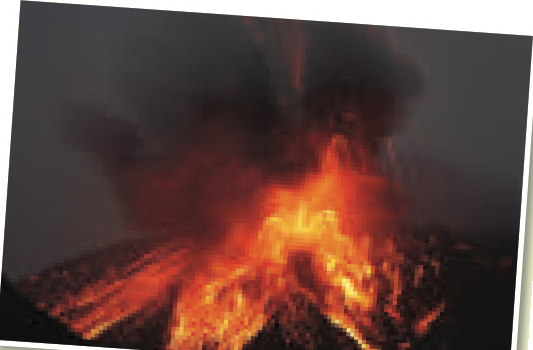 Magma activity
A volcano is a vent in the crust. Hot magma erupts through it, and the material piles up to form a volcanic cone.
Textbook Figures 9.7 and 9.8, pp. 263–264.
Show answerHide answer
9.4Geohazard Phenomena
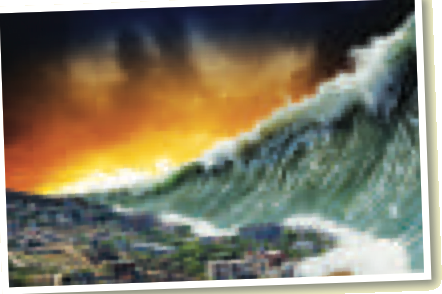 TsunamiVolcanism
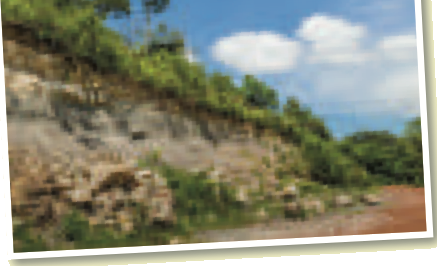 Landslide
Textbook Photograph 9.3, p. 265.
Technology for early warnings
- A landslide detector is placed on hill slopes. When the slope moves, the gravel rubs and makes sound that an acoustic sensor picks up.
- A tsunami detector is placed at the shoreline and sends early warnings of a tsunami via satellite.
- A seismograph detects earthquake vibrations.
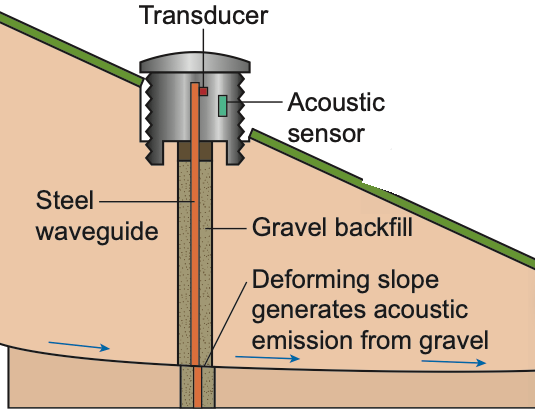
Textbook Figure 9.10, p. 266.
Impact of geohazards
Geohazards can cause loss of life, disease, starvation and damage to property. Examples in Malaysia: the 2004 tsunami (43 Malaysians killed), the 2015 Mount Kinabalu earthquake (19 killed) and mudslides in Cameron Highlands. We should sympathise with and help disaster victims.
Show answerHide answer
9.5Age of the Earth
The Earth is about 4.5 billion years (4500 million years) old. Scientists estimated this from meteorites.
| Era (oldest at the bottom) | Main life |
|---|---|
| Cenozoic — we live in this era | Mammals; humans |
| Mesozoic | Dinosaurs; first flowering plants |
| Paleozoic | Fish, insects, early land plants |
| Precambrian | Bacteria, protozoa, seaweed, jellyfish |
Eras: textbook Figure 9.11, p. 268 (M.Y. = million years).
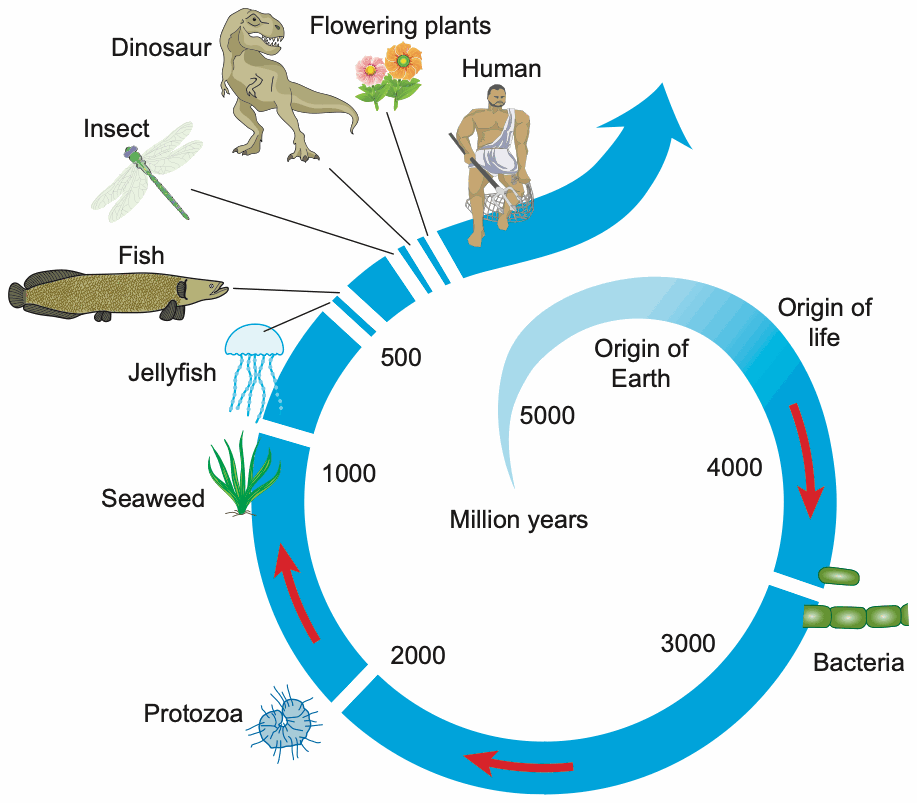
Textbook Figure 9.13, p. 269.
Why fossils matter: they show how plant and animal species have evolved over millions of years, and they tell us about species that have become extinct. In Malaysia, dinosaur fossils were found for the first time in Pahang.
Show answerHide answer
9.6Earth's Resources and Applied Geology
Surface water and underground water
| Surface water | Underground water | |
|---|---|---|
| What | Water on the Earth's surface: seas, ponds, rivers | Water (an aquifer) filling the spaces between soil particles and layers of permeable rock |
| Risks | Waste from factories and housing areas; too much fertiliser and pesticide from farms | Fertilisers and pesticides leaching into the ground; chemicals from waste in landfills |
Economic minerals
| Type | Examples |
|---|---|
| Metallic minerals | Iron ore, tin, gold |
| Non-metallic minerals | Coal, petroleum |
| Rare earth minerals | Contain some of the 17 rare earth elements; used in computers, DVDs, communication devices and televisions |
Rare earth elements are fairly common, but they are hard to separate because they occur together.
How coal and petroleum form
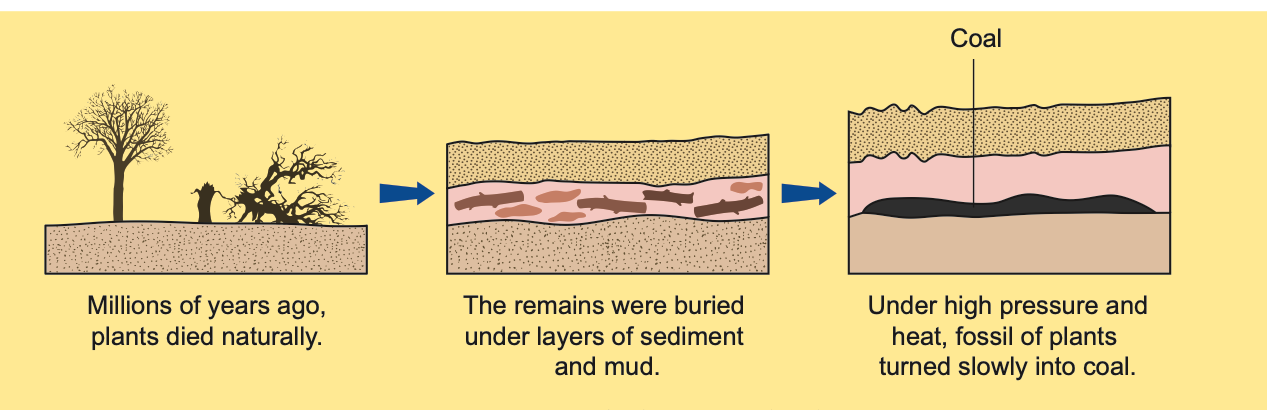
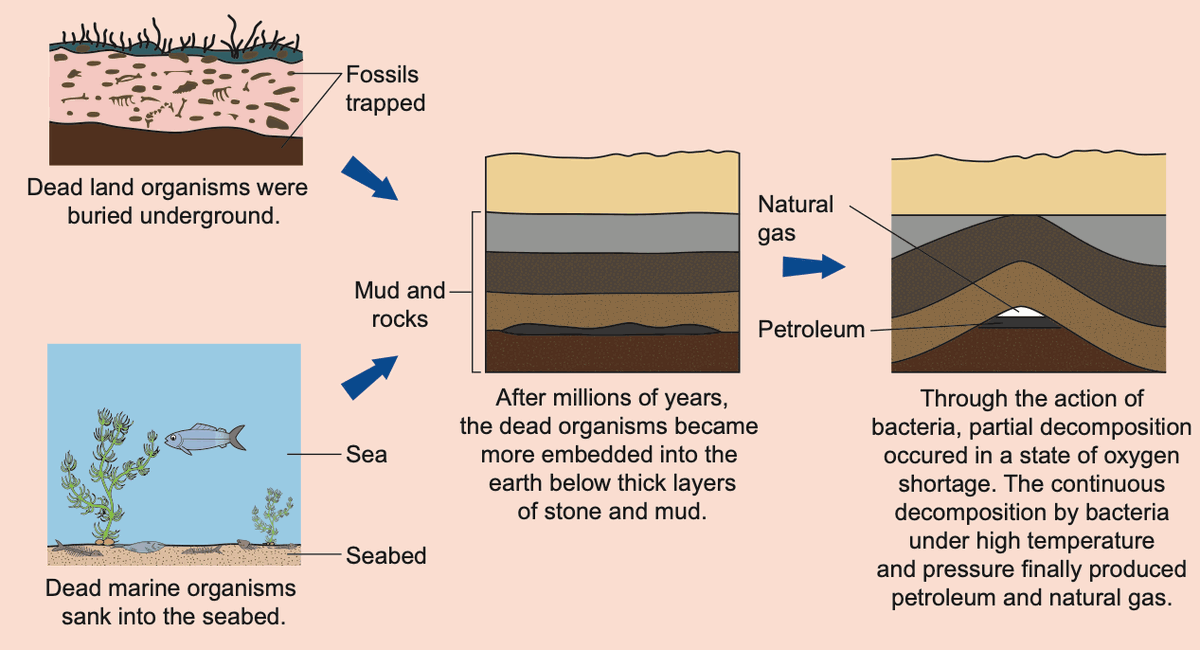
Textbook Figures 9.14 and 9.15, p. 271.
The hydrothermal process
Water underground is heated naturally by heat from the Earth (magma). This is the hydrothermal process. It produces hot springs (e.g. Sungai Klah, Perak), and the hot steam can drive a turbine to generate electricity.
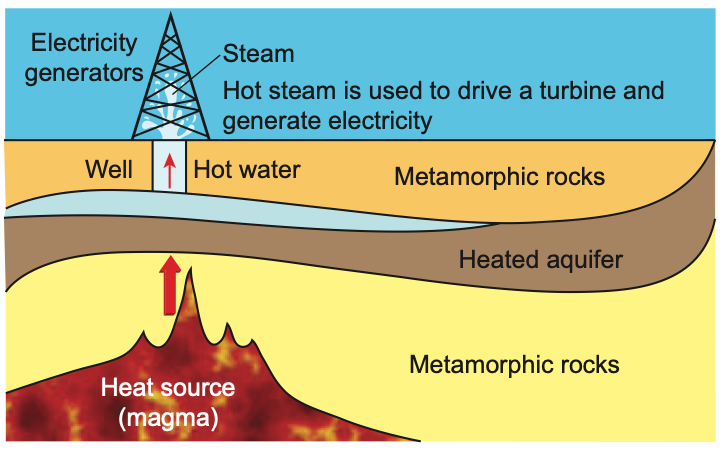
Textbook Figure 9.16, p. 272.
Unplanned human activities
Deforestation, agriculture, industrialisation and open burning that are not well planned can cause erosion, flash floods, extinction of flora and fauna, pollution (water, air, thermal and sound) and global warming.
Show answerHide answer
Summary
| Remember | Key fact |
|---|---|
| Earth system | Atmosphere, hydrosphere, geosphere, biosphere |
| Atmosphere (bottom → top) | Troposphere (weather) → stratosphere (ozone, aircraft) → mesosphere (meteorites) → thermosphere (aurora, radio waves) → exosphere (satellites) |
| Ocean zones | Surface (light) → midnight (little light) → dark (no light) |
| Earth's layers | Crust → mantle → outer core → inner core |
| Rocks | Igneous (cooled magma), sedimentary (compressed layers, fossils), metamorphic (heat + pressure, hardest) |
| Processes | Exogenic: on the surface (weathering, erosion). Endogenic: from inside (convection, plate tectonics, volcanoes) |
| Geohazards | Earthquake, landslide, tsunami, volcanism; warnings from detectors and seismographs |
| Age of Earth | About 4.5 billion years; eras → periods; fossils show evolution and extinction |
| Resources | Surface and underground water; metallic, non-metallic and rare earth minerals; coal and petroleum from buried organisms; hydrothermal energy |