Introduction to Scientific Investigation
By the end of this chapter you can
- Explain what science is and why it matters in daily life (1.1)
- Name common laboratory apparatus, their functions and the hazard symbols (1.2)
- Use base quantities, S.I. units and prefixes, and convert units (1.3)
- Choose and read measuring instruments; explain accuracy, consistency, sensitivity and errors (1.4)
- Calculate density and predict whether objects float or sink (1.5)
- Follow the steps of a scientific investigation and identify variables (1.6)
- Practise scientific attitudes and values (1.7)
1.1Science is Part of Daily Life
Natural phenomena are things that happen in nature, such as a rainbow, thunder, day and night, or a baby growing. Things made by people, such as tall buildings, are not natural phenomena.
Why science is important
| Area | How science helps |
|---|---|
| Engineering | Construction of tall buildings and bridges |
| Communication | Satellites make communication faster and more effective |
| Agriculture | Fertilisers, pesticides and the hydroponic method increase crop yields |
| Medicine | Vaccines and antibiotics control infectious diseases and reduce the death rate |
Fields of science and careers
| Field | Study of | Examples of branches | Careers |
|---|---|---|---|
| Biology | Living things | Zoology, botany, microbiology, physiology | Doctor, zoologist, botanist, microbiologist |
| Physics | Energy and its influence on matter | Engineering | Physicist, engineer |
| Chemistry | Matter and its reactions | Pharmacology, forensics, toxicology | Pharmacist, chemist, forensic scientist |
| Geology | Rocks, soil and minerals | Geochemistry, geophysics | Geologist |
| Astronomy | Planets, stars and objects in the universe | Astrophysics | Astronomer |
| Meteorology | Weather and climate change | Hydrometeorology | Meteorologist |
Inventions such as cars, telephones, computers and robots are innovations in technology that use science to solve problems in life.
Show answerHide answer
1.2Your Science Laboratory
Common apparatus and their functions
 Beaker
Holds larger amounts of chemicals
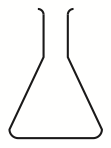 Conical flask
Holds larger amounts of chemicals
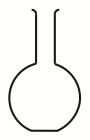 Flat-bottom flask
Holds larger amounts of chemicals
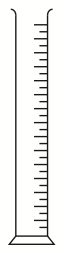 Measuring cylinder
Measures volume of liquid
 Burette
Measures volume of liquid accurately
 Pipette
Measures a fixed volume of liquid
 Tripod stand
Supports apparatus during heating
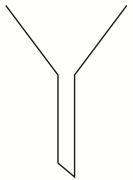 Filter funnel
Separates insoluble solids from mixtures
 Gas jar
Contains gas
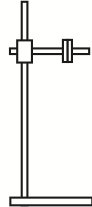 Retort stand with clamp
Holds or supports apparatus
 Evaporating dish
Evaporates excess solvent
Apparatus drawings: Science Form 1 (DLP) textbook, Table 1.1, pp. 10–11.
Hazard symbols
| Symbol | Meaning and precaution | Examples |
|---|---|---|
 | Irritant — vapour or fumes hurt the eyes, nose and throat. Do not inhale; use a fume chamber. | Chloroform, ammonia |
 | Radioactive — emits radioactive rays that can cause cancer. | Uranium, plutonium |
 | Corrosive — burns the skin. Do not touch; if it touches you, wash with lots of water. | Concentrated acid and alkali |
 | Poison / toxic — do not drink, eat, smell or taste. | Mercury, chlorine |
 | Explosive — use carefully according to instructions. | Hydrogen gas, butane gas |
 | Flammable — vaporises easily and catches fire. Keep away from fire and heat. | Alcohol, petrol |
Hazard symbols: textbook Figure 1.7, p. 12.
Laboratory rules and safety
- Do not enter the laboratory or start an experiment without the teacher's permission and instructions.
- No eating, drinking or playing. Do not take apparatus or chemicals out of the laboratory.
- Never point the mouth of a test tube at yourself or others. Wear safety goggles when mixing or heating chemicals.
- Do not taste or smell anything unless the teacher allows it.
- If an accident happens: do not panic, report to the teacher, switch off the electricity if there is a fire, and rinse chemicals off the skin with plenty of water.
Show answerHide answer
1.3Physical Quantities and Their Units
| Base quantity | S.I. unit | Symbol |
|---|---|---|
| Length | metre | m |
| Mass | kilogram | kg |
| Time | second | s |
| Temperature | kelvin | K |
| Electric current | ampere | A |
Prefixes
| Prefix | Symbol | Value | Standard form |
|---|---|---|---|
| giga | G | 1 000 000 000 | 109 |
| mega | M | 1 000 000 | 106 |
| kilo | k | 1 000 | 103 |
| deci | d | 0.1 | 10−1 |
| centi | c | 0.01 | 10−2 |
| milli | m | 0.001 | 10−3 |
| micro | µ | 0.000 001 | 10−6 |
| nano | n | 0.000 000 001 | 10−9 |
Converting units
- Mass: kg → g, × 1000. g → kg, ÷ 1000.
- Length: km → m ×1000; m → cm ×100; cm → mm ×10 (divide to go the other way).
- Time: hour → minute ×60; minute → second ×60 (divide to go the other way).
8200 g = 8200 ÷ 1000 = 8.2 kg
95 mm = 95 ÷ 1000 = 0.095 m
450 s = 450 ÷ 60 ÷ 60 = 0.125 hr
Why S.I. units matter: old measurements such as the span, fathom, pace and cubit depend on the size of the person's body, so two people get different answers. Standard units let everyone, everywhere, agree.
Show answerHide answer
1.4Measuring Instruments, Accuracy, Consistency, Sensitivity and Errors
Consistency — giving the same reading when a measurement is repeated.
Sensitivity — the ability to detect a small change in the quantity measured.
| Quantity | Instrument | Smallest reading |
|---|---|---|
| Length | Ruler, measuring tape | 0.1 cm (1 mm) |
| Length (thickness, diameter, depth) | Vernier calipers | 0.01 cm (0.1 mm) |
| Length (very small: paper, hair, wire) | Micrometer screw gauge | 0.001 cm (0.01 mm) |
| Mass | Lever balance, triple beam balance, digital electronic balance | — |
| Time | Stopwatch (0.1 s or 0.2 s); digital stopwatch (0.01 s) | |
| Temperature | Laboratory thermometer (1 °C); clinical thermometer (0.1 °C); digital thermometer (0.1 °C) | |
| Electric current | Ammeter; digital ammeter (0.01 A) | |
| Volume of liquid | Measuring cylinder |
To convert °C to kelvin, add 273: 0 °C = 273 K.
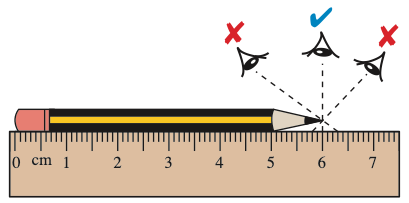
Reading vernier calipers
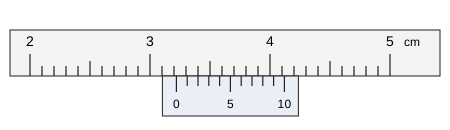
2. Find the vernier line that lines up exactly with a main-scale line: line 2 → 2 × 0.01 = 0.02 cm.
3. Add: 3.2 + 0.02 = 3.22 cm.
Reading a micrometer screw gauge
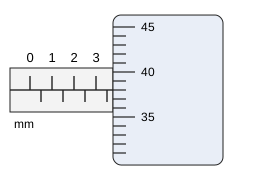
2. Thimble reading: division on the centre line = 38 → 38 × 0.01 = 0.38 mm.
3. Add: 3.50 + 0.38 = 3.88 mm.
Errors
| Systematic error | Random error | |
|---|---|---|
| What | Same error in every measurement, from the instrument | Uncertainty caused by the observer |
| Examples | Zero error; inaccurate instrument | Parallax error; carelessness; wrong technique |
| Reduce it by | Working carefully; repeating with a different instrument | Taking several readings and averaging; eye perpendicular to the scale |
Estimating before measuring
- Area of an irregular shape: trace it on 1 cm graph paper and count squares that are at least half covered.
- Mass of something very light: weigh many and divide (100 sheets = 500 g → 1 sheet ≈ 5 g).
- Volume of a regular solid: length × width × height. Irregular solid: water displacement (final volume − initial volume).

Show answerHide answer
1.5Density
Density (g cm−3) = Mass (g) ÷ Volume (cm3)
Materials that are less dense float on materials that are denser. Ice (0.92 g cm−3) floats on water (1.00 g cm−3); copper (8.92 g cm−3) sinks.
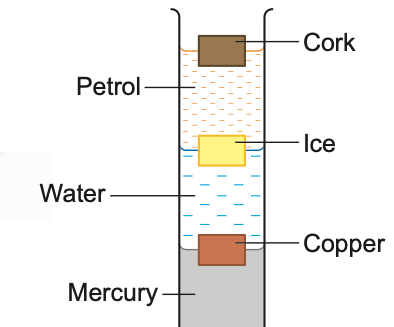
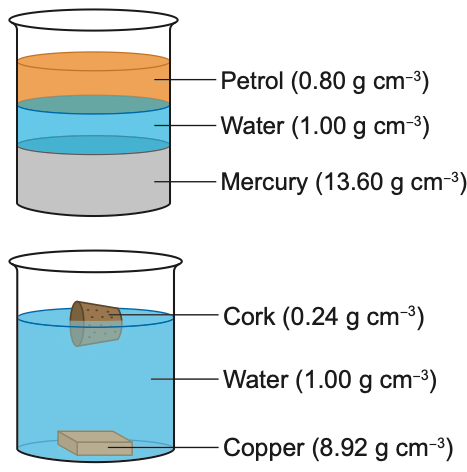
Mass of X = 320 − 230 = 90 g. Density = 90 ÷ 50 = 1.8 g cm−3.
Volume = 23 − 15 = 8 cm3. Density = 24 ÷ 8 = 3 g cm−3 → denser than water, so it sinks.
Density in daily life: ice floats on water; helium balloons rise because helium is less dense than air; timber can be floated down rivers; layered drinks (e.g. three-layer tea) are made by pouring the densest liquid first.
1.6Steps in a Scientific Investigation
The 12 science process skills: observing, classifying, measuring and using numbers, making inferences, predicting, communicating, using time–space relationships, interpreting data, defining operationally, controlling variables, making a hypothesis, experimenting.
- Identify a problem that can be tested.
- Construct a hypothesis — a testable statement linking two variables.
- Control variables — manipulated, responding and constant.
- Plan the experiment — materials, apparatus and method.
- Conduct the experiment — carefully and safely.
- Collect data — at least three readings; record in a table.
- Analyse and interpret data — use tables and graphs.
- Make a conclusion — accept or reject the hypothesis.
- Write a report.
Responding variable — what changes as a result (what you measure).
Constant variable — what you keep the same.
Manipulated: length of pendulum. Responding: time for 10 oscillations. Constant: mass of pendulum, angle of release.
Conclusion: hypothesis accepted.
1.7Scientific Attitudes and Values
- Be interested and curious about your surroundings.
- Be honest and accurate when recording and validating data.
- Be responsible for your own and others' safety, and for the environment.
- Appreciate a clean and healthy lifestyle and the balance of nature; be polite; be grateful for nature as a gift from God.
Practising these attitudes gives more accurate results and makes you a better problem solver and a responsible, creative researcher.
Summary
| Remember | Key fact |
|---|---|
| Science | Systematic observations and experiments of natural phenomena |
| 5 base quantities | Length (m), mass (kg), time (s), temperature (K), electric current (A) |
| Most sensitive length instrument | Micrometer screw gauge (0.01 mm) > vernier calipers (0.1 mm) > ruler (1 mm) |
| Actual reading | Reading − zero error |
| Density | Mass ÷ volume; less dense floats, denser sinks |
| Variables | Manipulated (change) → responding (measure); constant (keep same) |